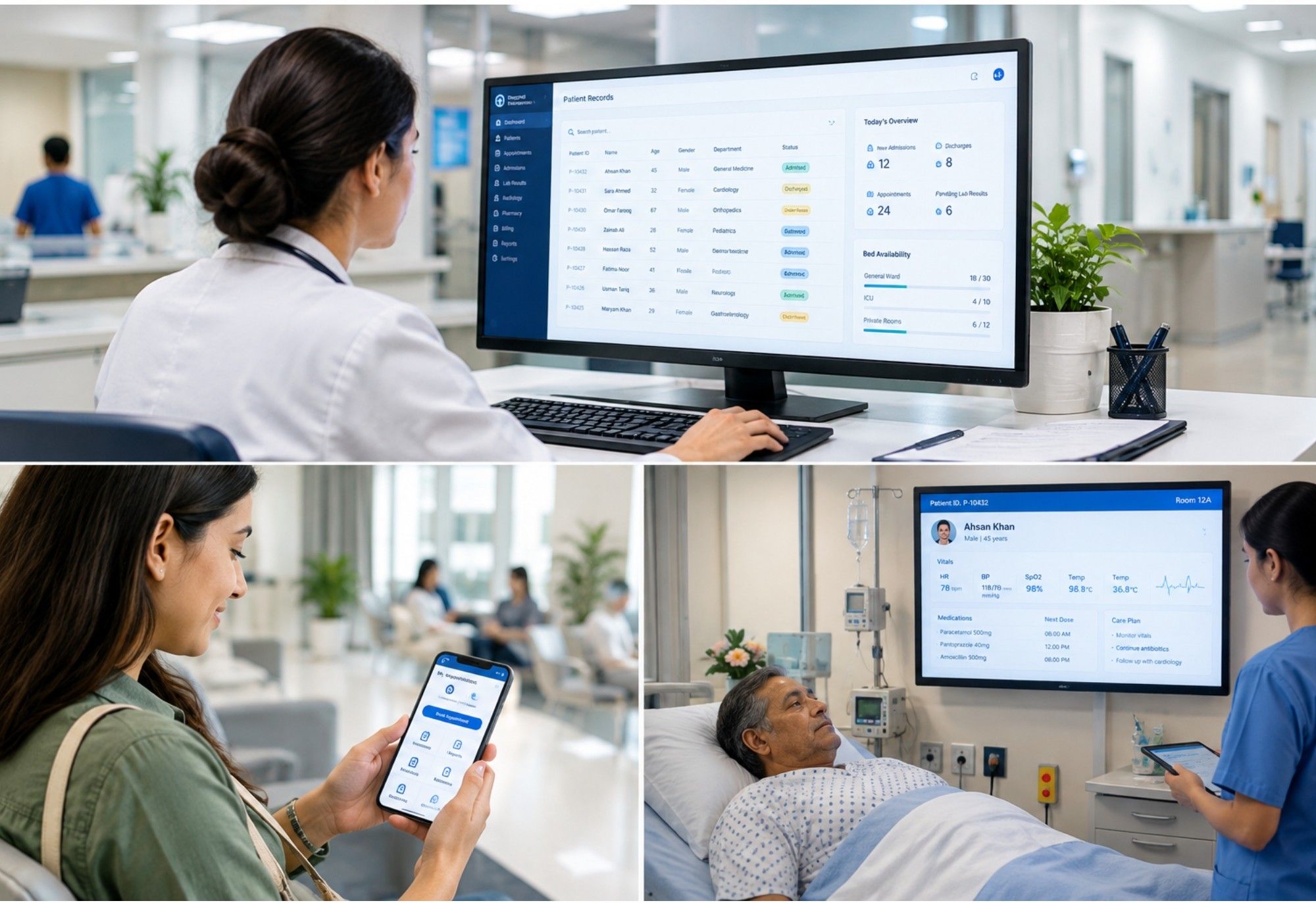
Healthcare organisations are constantly producing massive amounts of patient data every single day. But to be honest, just storing that information is only half the battle. The bigger issue is whether the right people, the right systems, and the right providers can actually get to that data and use it when they need it.
That's really where the difference between an Electronic Medical Record (EMR) and an Electronic Health Record (EHR) becomes a pretty big deal.
The two terms are used interchangeably a lot of the time, but they actually do quite different things. An EMR typically keeps a digital record of a patient's treatment that happens within a specific practice or healthcare organisation. On the other hand an EHR takes a more holistic approach, allowing patient information to actually support care across all sorts of different providers and healthcare settings.
The more you dig into it, the more you start to see just how important this distinction is, especially as healthcare starts to move towards these connected systems. Let's go a bit deeper and have a look at where this actually starts to matter most.
What Is EHR?
An Electronic Health Record (EHR) is a digital record of a patient’s health information that only authorized healthcare professionals can use across different stages of care. It can bring together clinical information such as medical history, diagnoses, medications, allergies, laboratory results, imaging reports, treatment plans, and other information relevant to a patient’s care. Unlike a paper chart, an EHR does more than replace a physical medical record. It gives healthcare organizations a digital system for collecting, managing, updating, and sharing patient information. A patient may receive care from a primary care physician, specialist, laboratory, pharmacy, and hospital at different points in time. Each provider may use a different system to manage its part of the patient care. An EHR can help connect this information when the systems support appropriate data exchange.
What Does an EHR Include?
The exact capabilities of EHR vary by software and healthcare organization, but modern systems commonly support several core functions such as:
- Patient Records
- Clinical Documentation
- Laboratory and Diagnostic Results
- Medication Management
- Care Coordination
- Patient Portals
- Reporting and Analytics
What Distinguishes an EHR?
The defining characteristic of an EHR is way more than just the fact that it stores health info electronically. It's really about supporting continuity of care & information sharing, getting all the key players on the same page.
An EHR can connect information from different parts of the patient’s health journey. When properly integrated, it can become part of a more complete view of the patient. By pulling in information from a laboratory, pharmacy, specialist, hospital, or other healthcare service used by patients.
Such a data exchange depends heavily on interoperability. An EHR cannot automatically exchange information with every healthcare system simply because it is an EHR. The systems involved need compatible interfaces, data standards, integration capabilities, security controls, and appropriate authorization to move data from one system to another.
What Is EMR?
An Electronic Medical Record (EMR) is a digital version of the medical chart that healthcare professionals use to document and manage a patient’s care within a specific practice, clinic, hospital, or healthcare organization. It replaces the traditional paper chart with a digital record that clinicians can update, review, and use during patient care. An EMR can contain information collected throughout a patient’s treatment, including medical history, diagnoses, medications, allergies, laboratory results, clinical notes, and treatment plans. The system gives healthcare professionals quick access to information they need during a patient visit and also helps organizations maintain consistent, organized medical records.
Common Features of an EMR
The features available depend on the software and the healthcare organization, but an EMR commonly includes:
- Patient registration and demographics
- Medical history management
- Clinical documentation
- Diagnosis management
- Medication and prescription management
- Allergy tracking
- Laboratory results
- Imaging and diagnostic reports
- Appointment scheduling
- Provider notes
- Treatment plans
- Clinical alerts and reminders
- Patient record search
- Billing and coding support
- Reporting and analytics
- Role-based access
- Audit trails
- Data security and access controls
What Distinguishes an EMR?
The main distinction lies in its scope and use.
An EMR primarily supports the healthcare organization that creates and maintains the patient record. It gives clinicians a centralized digital record for managing care within their own practice or facility.
For example, a physician using an EMR can review a patient's previous visits, record a new diagnosis, prescribe medication, review laboratory results, and update the treatment plan without relying on a paper chart.
However, information stored in one EMR does not automatically become available to another healthcare organization. If a patient moves from a clinic to a hospital, visits a specialist, or receives testing from an external laboratory, the ability to exchange that information depends on the systems and integrations involved.
This is where EMR systems begin to intersect with the larger question of healthcare interoperability. An EMR provides the digital record and the tools to manage it. Interoperability determines how effectively that information can connect with other healthcare systems.
How EMR and EHR Systems Work in Healthcare
EMR and EHR systems follow the same basic principle: they turn patient information into a digital record that healthcare professionals can access and use during care. When a patient visits a healthcare provider, staff enter or update information such as medical history, symptoms, diagnoses, medications, test results, and treatment plans. The system stores this information in the patient’s digital record, where authorized users can retrieve it during future visits.
An EMR primarily supports this process within a specific healthcare organization. Doctors and clinical staff can review previous visits, document new findings, order tests, update medications, and manage treatment from one system.
An EHR extends this functionality by supporting the exchange of relevant health information beyond a single organization. When connected systems support interoperability, information can move between healthcare providers, laboratories, pharmacies, hospitals, and other authorized participants in a patient’s care.
For example, a physician may order a laboratory test through the system. The result can return electronically, become part of the patient’s record, and remain available to authorized healthcare professionals who need it.
Patient information → Digital record → Clinical use → Data exchange → Coordinated care
The difference lies mainly in how far that information can travel and how many healthcare systems can work with it. That distinction becomes increasingly important as healthcare organizations rely on multiple specialized systems to manage patient care.
Also read about: Blood Bank software client satisfaction survey
EMR & EHR Interoperability: Why Healthcare Data Must Connect
A digital patient record becomes more useful when authorized healthcare systems can share the information it contains. Without interoperability, patient data can remain locked inside separate systems, forcing providers to rely on phone calls, faxes, printed records, or manual data entry to obtain information from another organization. Interoperability allows different healthcare systems to exchange and use patient information in a structured way. A hospital, laboratory, pharmacy, specialist, or primary care provider can access relevant information without requiring staff to recreate the same data in another system. For example, when a patient receives care at a hospital, the treating physician may need access to recent laboratory results, medications, allergies, or previous diagnoses recorded by another provider. An interoperable EHR can make that information available within the clinician's workflow, subject to authorization and applicable privacy requirements. This connection also reduces duplicate data entry and helps keep records consistent across organizations. When systems exchange information reliably, healthcare professionals spend less time searching for records and more time using the information to support patient care. Interoperability does not mean every healthcare system uses the same software. It means those systems can exchange, interpret, and use health information in a way that supports continuity of care.
How EHR Systems Share Data Between Hospitals, Labs & Clinics
Modern healthcare software does not work as an isolated record system. EHR platforms connect with hospitals, clinics, laboratories, pharmacies, imaging centers, and other healthcare systems so authorized patient information can move between them.
These connections typically rely on interoperability standards, APIs, health information exchanges, and integrated healthcare applications. A clinic, for example, can send a patient’s referral and relevant medical information to a hospital, while the hospital can return diagnoses, treatment details, or test results to the patient’s record.
Laboratories can also connect directly with EHR systems. When a physician orders a test, the order can reach the laboratory electronically. Once the lab completes the test, the results can flow back into the patient’s record without staff manually entering the data. Here the goal is simple: make the right patient information available to the right healthcare professional when they need it.
HL7 and FHIR: How Healthcare Systems Exchange Patient Data
HL7 and FHIR provide the standards that help healthcare systems exchange patient information in a consistent format. They allow different software platforms to understand and use data even when hospitals, clinics, laboratories, and other providers use different systems.
HL7 refers to a family of healthcare data exchange standards used to transfer information between clinical systems. Healthcare organizations can use HL7-based messaging to share information such as patient demographics, admissions, orders, diagnoses, and laboratory results.
FHIR (Fast Healthcare Interoperability Resources) takes a more modern, web-based approach to healthcare data exchange. It organizes information into standardized resources, such as patients, medications, observations, appointments, and diagnostic reports. FHIR APIs allow authorized applications and healthcare platforms to request and exchange this information.
Modern EHRs and healthcare applications increasingly use FHIR APIs to connect with external systems. This creates a more connected flow of information without requiring every organization to replace its existing software.
The difference is important here: HL7 established widely used methods for exchanging healthcare information, while FHIR provides a modern framework for making that information easier for today's connected healthcare applications to access and use.
EHR Integration With Laboratory, Pharmacy, Billing & Other Systems
EHR systems connect with other healthcare applications to keep information moving across the care process. Integration with laboratory, pharmacy, billing, imaging, scheduling, and insurance systems allows organizations to share relevant data without entering the same information multiple times.
Patient Portals and EHRs: How Patients Access Their Health Records
Patient portals give patients direct access to information stored in their EHR. Through a secure portal, patients can view test results, medications, diagnoses, visit summaries, appointments, and other health information from a computer or mobile device.
Many modern healthcare systems also allow patients to request appointments, communicate with providers, download records, and manage other aspects of their care through the same platform. The EHR remains the central record, while the patient portal gives patients a controlled way to access and interact with their own health information.
Common Problems With Disconnected Healthcare Systems
Disconnected systems create gaps in patient information. When hospitals, clinics, laboratories, pharmacies, and other providers cannot exchange data, staff often rely on manual processes to retrieve or transfer records.
This can result in duplicate data entry, incomplete patient histories, delayed test results, repeated tests, medication errors, and slower communication between providers. Staff may also spend significant time searching for information that already exists in another system.
Poor integration can also create problems with billing, scheduling, reporting, referrals, and administrative workflows. As healthcare organizations adopt more digital systems, connecting those systems becomes essential to keeping information accurate and accessible.
How to Choose the Right EMR/EHR Software
Healthcare organizations should choose EMR or EHR software based on how well it fits their workflows, connects with other systems, and supports future needs.
Start by assessing clinical workflows, interoperability requirements, security, scalability, usability, reporting, and integration capabilities. Check whether the system can connect with laboratories, pharmacies, billing platforms, imaging systems, patient portals, and other applications the organization already uses.
The software should also support relevant interoperability standards and provide reliable APIs for future integrations. Evaluate the vendor's implementation process, training, technical support, customization options, and ongoing updates.
The right EMR/EHR system should help the organization connect its data, simplify workflows, and support better care delivery.
Custom EMR/EHR vs Off-the-Shelf Software
Off-the-shelf EMR and EHR systems can cover common clinical and administrative needs, but they may not fit every healthcare organization. Hospitals, laboratories, and specialized healthcare providers often have workflows that require more flexibility.
A custom system can adapt to specific healthcare workflows, existing hospital systems, laboratory and blood-bank operations, custom reporting, and automated processes. It can also define role-based access, support interoperability, and connect with the systems an organization already uses. This is exactly where custom healthcare software development makes a difference. Instead of changing established workflows to fit a standard product, organizations can build software around the way their teams actually work.
Zaavia Software Company brings more than a decade of experience in healthcare software development, with solutions covering blood bank management, patient blood management, ISBT 128 labeling, healthcare system integration, and healthcare reporting and analytics.
For organizations that need more than a standard EMR or EHR, Zaavia can develop healthcare software around their specific workflows, integration requirements, and operational needs. Contact their team and discuss your ideas.
How Much Does EMR/EHR Software Cost?
EMR/EHR software does not have a fixed price. The cost depends on factors such as the number of users, required features, integrations, customization, deployment model, data migration, and ongoing support.
A small clinic may need a simple system with basic clinical and administrative features, while a hospital or healthcare network may require a larger platform with advanced interoperability, laboratory and pharmacy integrations, reporting, patient portals, and multiple departments.
For an accurate estimate, contact the EMR/EHR software vendor and discuss your organization’s requirements, workflows, integrations, and expected number of users. A vendor can then provide pricing based on the scope of the implementation.
Conclusion
EMR and EHR systems have become a core part of modern healthcare operations, but their value depends on how well they fit clinical workflows and connect with other systems.
For healthcare organizations, the priority should be clear: choose software that supports the way your teams work, connects the data they need, and can adapt as those needs change. Standard software may meet that need for some organizations. Others may require a customized and more connected approach.